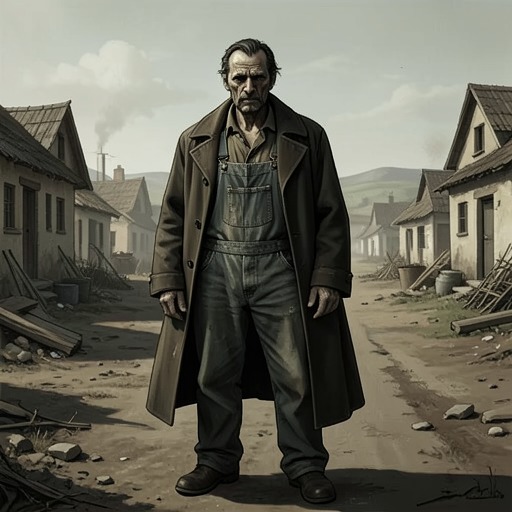
vrazhenyatko
Grey BeesThe Ukrainian word “vrazhenyatko,” explained in the narrative as something like “frenemy,” gives a name to Sergey Sergeyich and Pashka’s relationship: a long-running rivalry that never quite disappears, but gradually makes room for familiarity, help, and closeness. Its significance lies in holding those feelings together rather than reducing the two men to either enemies or friends.
Meaning and First Use
The word appears as Sergey Sergeyich considers why Pashka’s arrival still provokes resentment after roughly forty years. They had been the only two boys in a class of seven girls. Sergey Sergeyich recalls Pashka’s dirty fighting, tattling to teachers, and refusal to let him copy during exams. The narrator acknowledges that “enemy” is too harsh a word, but the history cannot simply be forgotten: “vrazhenyatko” offers a smaller, more qualified kind of enmity, one that suits an opponent who is familiar and not truly feared.
The term is therefore not a declaration that the quarrels never mattered. It keeps the grievance visible even as it limits its force. Sergey Sergeyich can remember Pashka as the boy who repeatedly frustrated him and still recognize that their adult relationship exceeds that old schoolyard opposition.
How the Rivalry Persists
When Pashka visits Sergey Sergeyich in wartime winter, the old antagonism shapes even the welcome. Sergey Sergeyich places a broom in front of the axe by the door before letting him in, wary that his neighbour might be armed. He greets him with an unfriendly grunt, and the sight of Pashka revives memories of their childhood contests. Pashka, in turn, notices the axe and responds with his familiar grin. Their gestures keep the rivalry alive, but also show how well each reads the other: the axe, the broom, and the grin belong to a private history between them.
Their conversation briefly turns more companionable when they talk about bees. Pashka considers leaving while the exchange is going well, hoping that this time they might manage to say goodbye without a fresh quarrel. The word’s meaning is visible in that fragile improvement: cordiality is possible, but it has to pass through their habitual mutual wariness.
From Frenemies to Something Like Brothers
The relationship also tests the limits of that wariness. When Sergey Sergeyich proposes crawling out to move a dead man out of sight, Pashka refuses to go, insisting that the people who sent the man should retrieve him. The blunt refusal ends the discussion; the narrator says its harshness makes clear there is no point pressing him. Pashka then asks for the binoculars and looks for himself. Their disagreement is real, and the label does not turn it into easy solidarity.
Yet later Sergey Sergeyich’s understanding of Pashka shifts. After Pashka has stayed at his home, Sergey Sergeyich thinks that, despite their quarrels, each meeting leaves him feeling closer to his neighbour. He no longer really sees Pashka as an enemy; in some respects, they have become brothers, though not by blood. “Vrazhenyatko” thus names a bond in transition: it retains the comic, stubborn residue of childhood conflict while making room for mutual aid and an intimacy that neither man needs to declare formally.